
The Grand Inquisitor’s Return
Dostoevsky, Freedom, and the Tyranny of Benevolent Experts

I. A Pinacotheca and a Prodigal: The Education of Freedom
There is a kind of philosophical education that takes place not in lecture halls but in front of paintings.
Pieter Bruegel, that Flemish obsessive, staged the cosmic battle between Lent and Carnival — between the disciplined soul and the soul enslaved to its addictions — with a crowd’s energy and a moralist’s rigour, and without a grain of sentimentality about which side habitually wins.
Across the same tradition, Rembrandt illuminated the same drama in a single beam of light: the prodigal son, returned, kneeling in the embrace of a father whose hands rest on his shoulders with a tenderness that does not require explanation. These are not decorative images. They are arguments. Without freedom, there is no dignity; without the genuine possibility of the wrong choice, the right choice is simply behaviour.
This is the great code of Western civilisation, inscribed from its earliest strata. Adam’s royalty — his dominion over creation, his naming of the animals — derived from the power to choose: a faculty granted by the Creator to no other being in the visible world. Plants do not deliberate. Stones do not repent. When a human being is deprived of this faculty, he does not revert to stone or plant. He becomes something worse: an animal with the memory of having once been free.
The civilisation that emerged from Jerusalem, Athens, and Rome was built on the radical wager that this faculty could be cultivated, educated, and even sanctified. From Moses to the prophets of the Old Testament, from Paul’s letters to the patristic commentaries, from Augustine’s restless heart to the Puritan preachers of the New World, the tradition of the Decalogue insisted that human nature fulfils itself through the exercise of personal choice. The question was never whether to be free, but how to be free well—how to choose, as Augustine understood, not merely without external constraint but in alignment with the truth that makes freedom possible at all.
Lord Acton, the greatest Catholic historian of liberty in the English-speaking world, spent his life tracing this genealogy. For Acton, freedom was not a gift of the Enlightenment but its precondition — a political achievement inseparable from the theological conviction that conscience answers to a law higher than any sovereign. His History of Freedom, magisterial and never completed, was premised on the finding that wherever power concentrates without accountability, the result is invariable: the corruption of those who hold it, and the degradation of those who endure it.
‘Power tends to corrupt,’ he wrote to Bishop Creighton in 1887, ‘and absolute power corrupts absolutely.’ The sentence has been quoted so often that its radicalism has been domesticated. In Acton’s mouth, it was not a bon mot; it was a historical law derived from the patient study of inquisitions, caesaropapisms, and revolutionary tribunals across two millennia.
Every Grand Inquisitor, without exception, began as a man who believed himself exempt from this law—and demonstrated it by confirming it.
II. The Novelist as Prophet
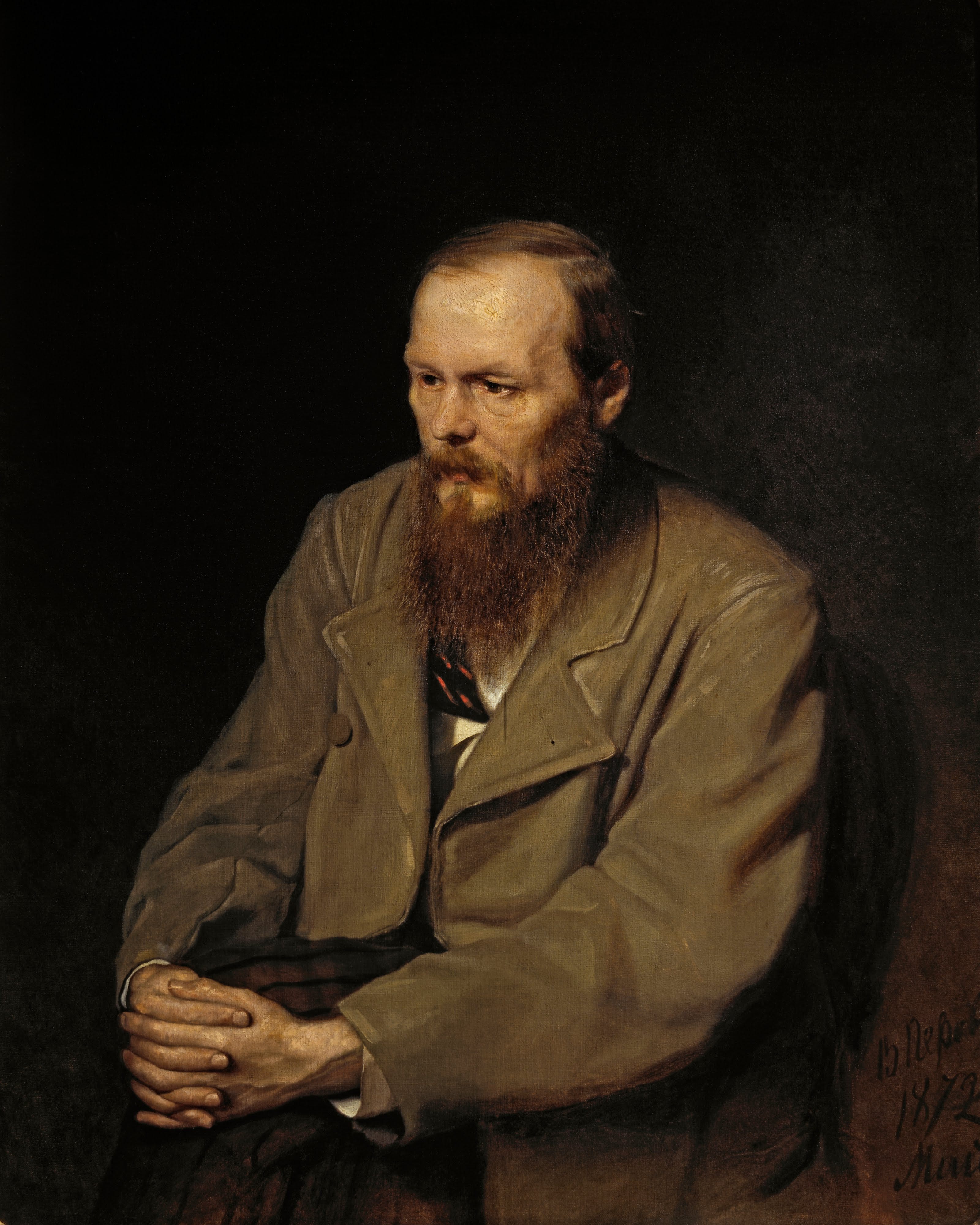
Dostoevsky arrived at his masterpiece through suffering that most writers are mercifully spared: a mock execution under the winter sky of St Petersburg; eight years in the Siberian abyss—the same frozen wilderness that, decades later, Solzhenitsyn would traverse carrying the same prophetic cargo. Out of that purgatory came The Brothers Karamazov: not a novel in the ordinary sense, but what Mikhail Bakhtin called a polyphonic cathedral — a structure in which no single voice drowns out the others, where the atheist speaks at full volume, and the saint does not interrupt him.
This formal choice is itself a theological act. In the Russia of Alexander II, a free-thinking writer risked what Pyotr Chaadaev and Alexander Herzen had already endured: censure, exile, the silence imposed by state and Church working in concert. That Dostoevsky gave Ivan Karamazov — his Grand Inquisitor’s ventriloquist—the most electrifying pages in Russian prose is not a lapse of faith but its highest expression. He understood, as Berdyaev would later formulate, that a freedom which cannot survive contact with its own negation is not freedom at all.
The architecture of the Karamazov family is Platonic before it is novelistic. In the Republic, Plato divides the soul into intellect, spirit, and appetite, assigning to their proper harmony the virtue of justice.
Dostoevsky dramatises this triad in three brothers: Ivan, the intellect dazzling itself into a dead end; Dmitri, appetite incarnate, magnificent and self-destructive; and Alyosha, the youngest, sent into the world by his spiritual father Zosima, who is the integrating principle—the soul that listens without flinching. Their patriarch, Fyodor Pavlovich, is Plato’s unjust man made flesh: a man who has dissolved every restraint and wonders why his house is on fire.
The central philosophical drama is staged not in a courtroom or a church but in a tavern — the Metropol— where Ivan invites his brother to hear a poem he has composed in his mind: the Legend of the Grand Inquisitor. It is here that Dostoevsky, in the guise of a twenty-four-year-old of boundless erudition, launches his most devastating prophetic sally. He was aiming at the Inquisition. He struck the twentieth century square. He is still striking ours.
III. Seville, 1480: The Second Trial
The scene is Seville at the height of the Spanish Inquisition. Christ has descended—not in eschatological glory, not as the lightning that flashes from East to West, but quietly, with that merciful smile which Dostoevsky renders with the delicacy of an icon-painter. He heals a blind man. He raises a child from the dead before the cathedral doors. And then, at a single gesture from the Grand Inquisitor — a figure of almost ninety years, dressed in a coarse monk’s robe, his eyes holding a faint ember—the crowd, the same crowd that moments earlier had kissed His garments, parts to let the guards through. The prisoner is led away in silence.
What follows in the prison cell is the most extraordinary interior monologue in European literature: a second trial of Christ, conducted not by a Pontius Pilate washing his hands of the inconvenient, but by a believer who has replaced belief with management. The Grand Inquisitor is no crude cynic. He is something far more dangerous: a man who once loved freedom and renounced it on humanity’s behalf, having concluded that the gift was too terrible for the creature to bear.
His indictment turns on three temptations that Christ refused in the wilderness of Quarantania. The devil offered bread — material satiety in exchange for obedience. Christ refused, insisting that man does not live by bread alone. The devil offered spectacle—the theatrical proof of divine power, the leap from the temple’s pinnacle that angels would cushion. Christ refused, declining to reduce faith to magic. The devil offered empire — all the kingdoms of the world and their glory, the purple of Caesar. Christ refused, choosing the cross over the crown.
‘Instead of seizing men’s freedom, Thou didst increase it… Thou didst not come down from the cross when they shouted to Thee, “Come down from the cross, and we will believe.” Thou didst not come down, for again Thou wouldst not enslave man by a miracle.’
— The Grand Inquisitor, in The Brothers Karamazov
The Inquisitor’s argument is not Mephistophelean mockery. It is the logic of the welfare state, of the therapeutic regime, of every system that has ever promised to relieve human beings of the burden of choosing. ‘We have corrected your work,’ the old man tells the silent prisoner. ‘We have given them the miracle, the mystery, and the authority they craved. They are happy now — happy as only slaves can be.’ The horror of the speech is that it is not entirely wrong about human weakness. It is entirely wrong about what to do with that weakness.
IV. The Genealogy of a Temptation
That genealogy begins, improbably, with the Church’s own best tradition. The very civilisation that produced the Inquisition also produced its most formidable critics from within. Athanasius of Alexandria stood contra mundum against an imperial Christianity that would have dissolved theological truth into political convenience. John Chrysostom preached against the Empress Eudoxia’s confiscations from a pulpit she could have silenced with a word—and eventually did.
Thomas Becket died on the stones of Canterbury Cathedral rather than subordinate the liberty of the Church to the administrative ambitions of Henry II. In each case, what they defended was not a privilege but a principle: that there exists an authority to which temporal power must answer, and that no Caesar, however baptised, is exempt from its judgement.
European constitutional thought — the separation of powers, the rule of law, the accountability of rulers — is unintelligible without this tradition of ecclesiastical courage. Acton’s argument was precise: political freedom was not a secular achievement subsequently resisted by religion; it was a theological achievement, wrested from the tendency of power to absolutise itself, first by bishops, monks, and martyrs, and only later by parliaments.
The Incarnation itself is the founding political event in this genealogy. When Christ announces that man does not live by bread alone, He is not making a dietary observation; He is inaugurating a hierarchy of goods that places the human person—with his conscience, his capacity for truth, his freedom—above the administrative calculations of any empire.
The kenotic self-emptying of God into human form, as Gregory of Nyssa and later thinkers in the Orthodox tradition understood it, is the definitive refutation of every philosophy that reduces the person to a function of nature, history, or social utility.
Constantin Noica was not exaggerating when he suggested that Europe was born at Nicaea in 325: the theological definitions hammered out there — about persons, about the relation between freedom and necessity, about the irreducibility of the individual to any collective — constitute the philosophical grammar of what we call Western liberty.
It is precisely this tradition that the Grand Inquisitor has not abandoned but inverted. He still uses the vocabulary of love, care, and protection; he still acts in the name of the creature’s happiness. But he has made the crucial substitution: he has replaced the living person with an administrative category, the unique soul with the statistical aggregate, and the difficult gift of freedom with the manageable comfort of obedience. This is why Acton’s second axiom cuts so deep.
The Inquisitor is not a brute; he is a great man — almost certainly a saint once — who has been corrupted by the absolute power he holds over consciences. By Acton’s test — the security enjoyed by minorities — the Inquisitor’s Seville fails absolutely. So does every contemporary system that claims to protect people by monitoring, restricting, and pre-empting their choices.
The philosophical ancestor of this failure is not Machiavelli, who at least had the candour to describe power without dressing it in altruism. The true ancestor is the peculiarly modern figure who first appeared in full form with Rousseau: the legislator who knows better than the people what the people truly want, and who therefore feels licensed to will it on their behalf.
Jean-Jacques dreamed of a General Will that would compel men to be free; the Grand Inquisitor merely drops the adjective.
As Tocqueville observed with surgical clarity a generation after the Revolution, the despotism that democratic societies most needed to fear was not the tyranny of one man but the soft totalitarianism of the administrative tutelary state—‘an immense and tutelary power’ that keeps citizens in ‘perpetual childhood’, sparing them the trouble of thinking and the risk of living.
Eric Voegelin identified what he called ‘gnosticism’ as the defining pathology of modernity: the claim of a redemptive elite in possession of secret knowledge that entitles them to reorganise society from above. The Grand Inquisitor is the perfect gnostic. He knows the truth about human nature — that it is weak, that it craves certainty, that it will trade liberty for bread without a second thought — and he uses this knowledge not to liberate but to administer. His secret is precisely that there is no God; or rather, that God’s demands are impossible, and that the Church exists to manage that impossibility.
Nikolai Berdyaev, meditating on Dostoevsky’s text with the insight of someone who had lived through one version of the prophecy’s fulfilment, observed that Dostoevsky saw no essential difference between Catholic inquisitorialism and Byzantine caesaropapism: both sacrifice the person to the institution, freedom to order, and love to power. Isaiah Berlin’s distinction between negative and positive liberty maps with terrible precision onto the same fault line.
Negative liberty — freedom from interference, from coercion, from the surveillance of the benevolent expert — is what Christ offers: uncomfortable, open-ended, and requiring that the individual bear the weight of his own choices, including the choice to sin. Positive liberty—freedom as the ‘true’ realisation of the self, as defined by a higher authority—is what the Inquisitor provides.
As Berlin warned, once placed in institutional hands, that positive liberty becomes the philosophical licence for the most complete unfreedom. The Inquisitor’s headquarters migrated from Seville to Paris in 1789, to Petersburg in 1917, to Berlin in 1933, and to Bucharest in 1946. The costume changed; the logic did not.
V. The Cowardice of the Clerks
Dostoevsky’s legend is not only about tyrants. It is about the populations that welcome them — and about the intellectuals who prepare the welcome mat.
Étienne de La Boétie, writing in the sixteenth century with a precocity that still astonishes, asked the question that has haunted political philosophy ever since: why do millions obey one man? Not because they are forced to, he concluded, but because they choose to — because servitude, once habituated, feels like nature.
The Grand Inquisitor has merely modernised La Boétie’s insight: voluntary servitude requires neither chains nor dungeons. It requires only the promise of bread, the spectacle of power, and the relief of having someone else make the difficult decisions.
The great literary companions to this analysis are not works of political theory but of fiction. In Huxley’s Brave New World, the conditioning is so complete that the cage is invisible. In Orwell’s Nineteen Eighty-Four, the Inner Party has concluded that power is not the means to any end, but the end itself—and Winston Smith’s final, degraded love for Big Brother is the precise emotional analogue of the crowd kissing Christ’s garments before parting to let the guards through. Both Huxley and Orwell were, in this respect, Dostoevsky’s students, whether they acknowledged the debt or not.
Yet Dostoevsky reserves his sharpest blade for the intellectuals—the ‘clerks’ in Julien Benda’s formulation, those whose duty is the custody of truth and who betray it for comfort, prestige, or the mere quietness of life.
Ivan Karamazov is himself a clerk: brilliant, honest about his own dishonesty, fully aware that the logic of the Inquisitor leads to the degradation of man, and yet incapable of stopping the argument. He constructs the most devastating critique of God’s world in the history of Russian literature, then confesses to Alyosha that he cannot offer an alternative. He returns his ticket to the world. This is the intellectual’s characteristic gesture: the grandiose refusal that changes nothing.
The cowardice of clerks is institutional as much as individual. When the Inquisitor speaks of building a system on ‘miracle, mystery, and authority’, he is describing every knowledge establishment that has ever protected its monopoly by criminalising dissent. The Moscow show trials of the 1930s, which Arthur Koestler anatomised in Darkness at Noon, were not medieval relapses but hypermodern refinements of the same technique: the accused were broken not through ignorance but through the very rationalist tools—logic, consistency, the demand for coherent narrative—that the Enlightenment had bequeathed to its own executioners. Rubashov’s capitulation is the Grand Inquisitor’s dream made flesh.
VI. The Algorithm as Cardinal
Dostoevsky’s prophecy was aimed at the nineteenth century’s revolutionary utopias. It struck the twentieth century’s totalitarianisms. It is striking something still more insidious in ours—and doing so in the guise of its opposite.
The contemporary Grand Inquisitor does not wear a coarse monk’s robe. He presents himself in the language of empowerment, inclusion, safety, and care. He does not burn heretics: he deplatforms them, demonetises them, and ensures that the algorithms governing what three billion people encounter each morning quietly bury whatever disturbs the consensus. The pyres of Seville have been replaced by content-moderation dashboards, but the operating principle — that certain ideas are too dangerous for unguided citizens to encounter — is identical.
The three temptations have been updated for the digital age with a fidelity that would have impressed the devil himself. The first—bread—has become the offer of frictionless convenience: every desire anticipated, every discomfort algorithmically pre-empted.
Amazon, Netflix, and the entire architecture of the attention economy are not merely commercial enterprises; they are, in the Inquisitor’s sense, theological propositions about what human beings are: stimulus-response mechanisms to be optimised, not souls to be saved or lost.
The second temptation — spectacle — has metastasised into the permanent scroll, the dopamine cascade of the social-media feed, the twenty-four-hour news cycle that generates the sensation of momentous events whilst actively preventing the sustained attention that genuine understanding requires. Guy Debord, writing in 1967, called it the Society of the Spectacle: the replacement of lived experience by its representation, of participation by spectatorship. He did not live to see the smartphone complete what television began.
The third temptation — authority — has found its most potent contemporary form in Artificial Intelligence deployed as an oracle of last resort. When a technology presents itself as capable of making better decisions than unaided human judgment—better diagnoses, better juridical analyses, better predictions of criminal recidivism—it is making an Inquisitorial claim. It is saying, with the old man’s cold confidence, you cannot be trusted with your own reasoning. Leave it to us.
This is not a paranoid fantasy about rogue machines. It is a description of deliberate institutional choices being made, right now, by the unholy alliance that has replaced the medieval Church as the primary manager of human behaviour: the fusion of corporate platform power and state administrative ambition. The data harvested by private companies feeds the regulatory appetite of governments; the regulatory frameworks devised by governments create entry barriers that entrench the monopolies of large corporations. The circle is closed. At its centre, like the Inquisitor in his cell, sits not a villain but a bureaucrat who genuinely believes he is acting for humanity’s benefit.
Pierre Manent, in his analysis of liberal democracy’s internal contradictions, has observed that the modern state increasingly governs not through law, which requires articulation and debate, but through regulation and expertise—the proliferation of agencies, commissions, and technical bodies that make consequential decisions without democratic accountability, insulated from popular deliberation by the mystique of specialised knowledge. This is precisely the Inquisitor’s ‘mystery’ secularised: the claim that the governed cannot understand the principles by which they are governed, and should therefore not be consulted about them.
The COVID-19 pandemic offered the most compressed and globally synchronised demonstration of this logic in history. ‘Follow the science’—the phrase itself is a masterpiece of Inquisitorial rhetoric, collapsing the provisional, contested, and socially embedded process of scientific inquiry into the voice of infallible authority. Scientists who dissented from prevailing models, philosophers who questioned the proportionality of lockdown measures, and economists who modelled the long-term costs of school closures were not engaged in debate; they were treated, with varying degrees of institutional violence, as heretics. The Great Barrington Declaration, signed by thousands of epidemiologists and physicians, was subjected to a campaign of suppression coordinated between government agencies and social-media platforms that the Inquisitor would have recognised as professionally executed.
VII. The Silence and the Kiss
Dostoevsky does not give Christ a counterargument. He kisses Him.
The old man has delivered ninety years of accumulated administrative wisdom—the logic of a civilisation that has decided to manage human nature rather than redeem it. He has made every point that can be made from within the parameters of his system. And Christ, who is the Logos — the Word by which all things were made — does not reply in words. He approaches the Inquisitor and kisses his withered lips. The Inquisitor shudders. He opens the door. ‘Go, and come no more—never, never!’ And Christ walks out into the night, having said nothing and meaning everything.
What is communicated by this silence? Not capitulation, not agreement, not the resigned acceptance of an incomprehensible world. The kiss is the one act the Inquisitor’s system cannot process: it is the act of one free person recognising another—even in his degradation, even in his complicity with the mechanisms of unfreedom. It is what Alyosha, the novel’s therapeutic centre, practises throughout the book: the refusal to reduce any other person to his worst moment, his most compromised choice, his most elaborate self-justification.
Gregory of Nyssa articulated the principle that animates this gesture: human beings bear the image of God precisely in their capacity for freedom. To manage that freedom away, however benevolently, is not to serve the creature but to deface the icon. The Inquisitor, who thinks he loves humanity, has in fact concluded that human beings are not worth the inconvenience of their liberty. That is the ultimate heresy—not against doctrine but against the person.
Berdyaev called Dostoevsky’s fundamental insight ‘the metaphysics of freedom’, and contrasted it with every system, religious or secular, that treats freedom as a problem to be solved rather than a dignity to be honoured.
Vladimir Solovyov, Dostoevsky’s companion on the pilgrimage to Optina Pustyn in 1878, developed a complementary vision: that the unity of humanity could be achieved only through love that respects otherness, never through the administrative erasure of difference. These were not sentimental observations. They were—and remain—the most subversive propositions available to a civilisation tempted by the Inquisitor’s offer.
VIII. What Alyosha Knows
The Legend ends with Christ walking into the night. The novel does not end there. It continues with Alyosha — who has listened to Ivan’s story in a restaurant, in the city, at precisely the remove from wilderness that modernity has made permanent—and with his quiet, persistent, personally calibrated presence in the lives of those around him.
Alyosha’s politics, if one can call them that, are the politics of subsidiarity taken to their deepest roots: the conviction that the healing of any social order begins not with legislation but with the transformation of individual souls, one at a time, in relationships of genuine attention. His is not the idealism of the revolutionary who will liberate mankind by managing it better. It is the harder, humbler, and ultimately more durable work of the person who refuses both the Inquisitor’s contempt for human beings and the romantic inflation of human nature that makes that contempt inevitable as a correction.
Solzhenitsyn, who lived inside the Inquisitor’s system and survived it, drew the same conclusion in his 1978 Harvard Address — delivered at the height of the West’s comfortable certainties. The crisis of Western civilisation, he insisted, was not political but spiritual: a deficit of courage in the intellectual class, a willingness to trade the discomfort of truth for the security of consensus.
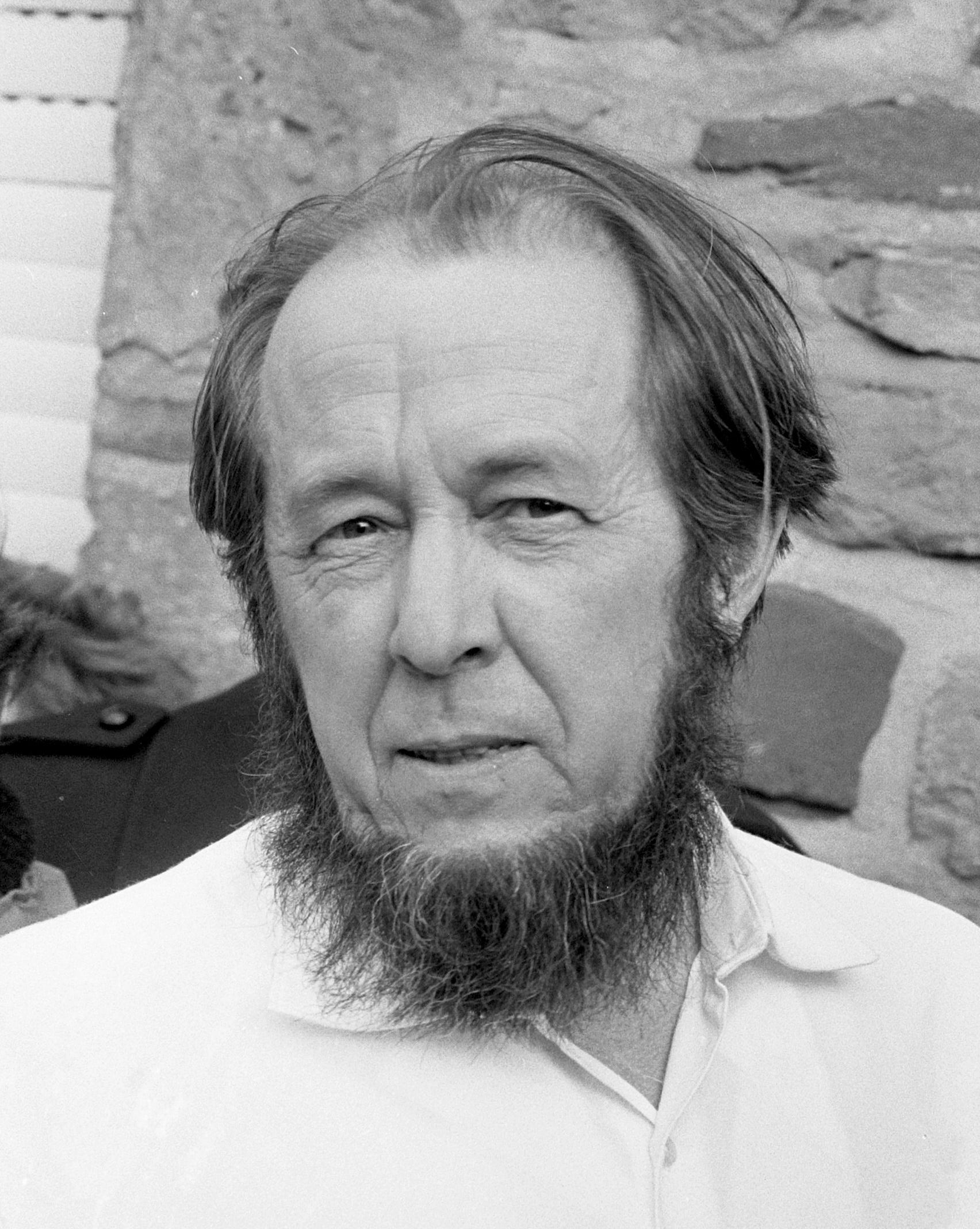
‘A decline in courage,’ he told his audience, ‘may be the most striking feature that an outside observer notices in the West.’ The Grand Inquisitor would have agreed and used the observation to justify his own system. The difference is that Solzhenitsyn drew from it the opposite conclusion.
What Alyosha knows — what the novel’s final scene, in which he leads a group of children in a liturgy of memory around the grave of their friend Ilyusha, makes luminously clear — is that the alternative to the Inquisitor is not the libertarian void but the community of persons who remember one another. Memory is the primary guarantee of personal identity against administrative abstraction. The moment a system controls what people remember — which narratives are canonical, which voices searchable, which historical judgements permissible — it has already accomplished what the Inquisitor could only dream of in his Sevillian cell.
The most terrifying sentence in Orwell’s novel is not ‘Big Brother is watching you.’ It is the sentence that describes Winston Smith’s final condition: ‘He loved Big Brother.’ The destruction of freedom is complete not when the body is imprisoned but when the soul consents. This is precisely what the Grand Inquisitor wants from Christ: not silence, but agreement. And it is what every contemporary system of algorithmic governance, therapeutic statism, and corporate platform monopoly ultimately seeks from its users: not mere compliance, but the warm internalisation of its values—the smile of someone who has been freed from the burden of thinking otherwise.
Christ does not provide that agreement. He kisses the old man and walks into the night. The night is still long. The door is still open. And the question the novel leaves hanging in the cold air — whose disciples are we? — is the one question that no algorithm, no regulatory body, no content-moderation policy, and no expertocracy can answer on our behalf. That is precisely the problem. And precisely the point.
"Life is the duel of God with the devil, and the battlefield is me." ...because Dostoievski is impossible to match!
Your lines,the depicted allegory Mr .Neamțu ,brought this aspect into discussion from so many and so different angles , that this "battlefield"of mine,of yours,of ours must rearrange now, must have different" strategies". That's why the "word"has so much power and words are the best "army"! And because my clumsy comment started with Dostoievski,I will finish it with another author which is dear to me:Lev Tolstoi :"Is not beauty that makes us to love,but love makes us to see the beauty".
Christ has risen!